November 27, 1924: Macy's Throws Its First Thanksgiving Parade, Zoo Animals and All
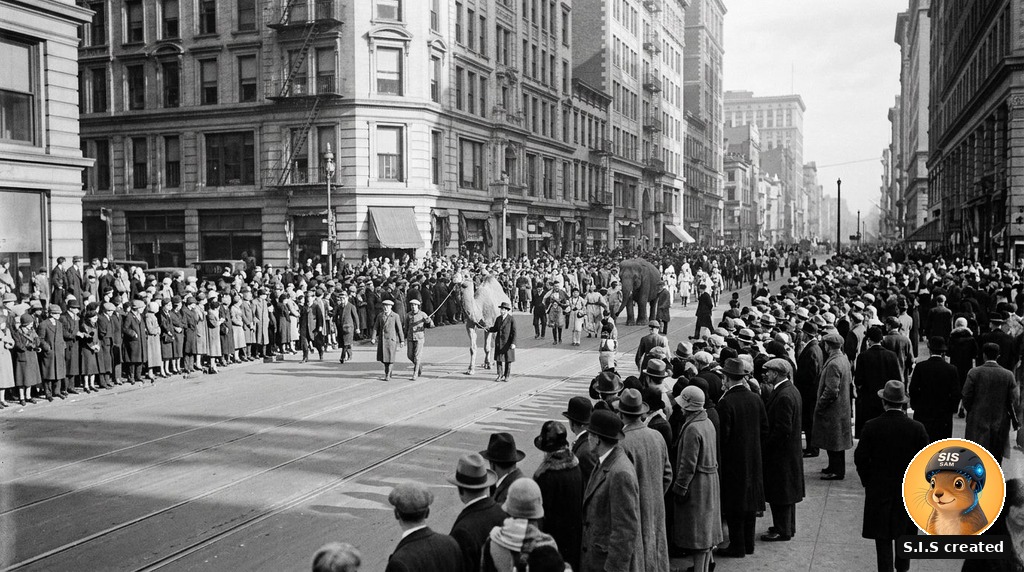
Source: Library of Congress – https://guides.loc.gov/this-month-in-business-history/november/macys-thanksgiving-parade
Before the giant balloons, before the television cameras, before Santa's arrival became a national cue to start Christmas, there was a department store, a new flagship, and a group of employees who decided the best way to say thanks was to throw a parade.
The Library of Congress marks Thanksgiving Day, Nov. 27, 1924, as the beginning of that annual tradition. It was originally known as the Macy's Christmas Parade, a name that told you exactly what the store had in mind. Macy's had just made its Herald Square location the largest store in the world, and the parade was meant to boost holiday sales and show off the new building. Employees organized it themselves. Many of them, the Library of Congress notes, were immigrants and first-generation Americans, choosing to celebrate their good fortune in a style that felt like the festivals of the places they had left, transplanted to the streets of New York.
The stars of that first procession were not inflated cartoon characters. They were live animals from the Central Park Zoo. The parade had the slightly delicious chaos of a small-town circus that had wandered into midtown: store clerks in costume, a jazz-age crowd on the sidewalks, and whatever creatures the zoo could spare for a Thanksgiving morning. Santa Claus was part of the show, arriving as the sign that the holiday season, as far as Macy's was concerned, started here.
The crowds liked it so much that the store issued what the Library of Congress describes as an immediate proclamation: the parade would become a tradition. It has been one ever since, for more than a century.
The balloons that now define the event arrived three years later, in 1927, with Felix the Cat as the first. The early years of those balloons were a learning process, to put it kindly. With no way to deflate them after the parade, they were released into the air, where they popped as they rose. The next year, valves were added so the helium could escape slowly, and a return address and a reward were offered in hopes the balloons would come back. Not all of them did. One landed in the East River. Another drifted out to sea. In 1932, the Library of Congress notes, a stray balloon wrapped itself around an airplane's wing and sent the plane into a tailspin. After that, the practice of letting the balloons go was finished.
What survived was the idea itself: a Thanksgiving morning in New York, a store that had become a landmark, and a parade that turned the start of the holiday season into something you could stand on a curb and watch. One hundred and two years later, the zoo animals are gone, the balloons are very much not, and Santa still has the last float. The tradition the employees started on Nov. 27, 1924, did exactly what they hoped it would do. It came back the next year, and the year after that, and it has been coming down the avenue ever since.
Sam's Take: I am on the record as supporting any parade that begins with gratitude and ends with Santa, though I have notes about the early balloon-release policy. If I ever float down Broadway, I want a recovery plan, a return address, and a very small emergency acorn compartment. Helmet on, eyes up, and no wrapping myself around any airplanes.
On This Day in History
Join The Daily Reflector
Become a subscriber and get full access to discussions, member stories, and exclusive content from our editors.
Subscribe Now →